
Duquesne Incline
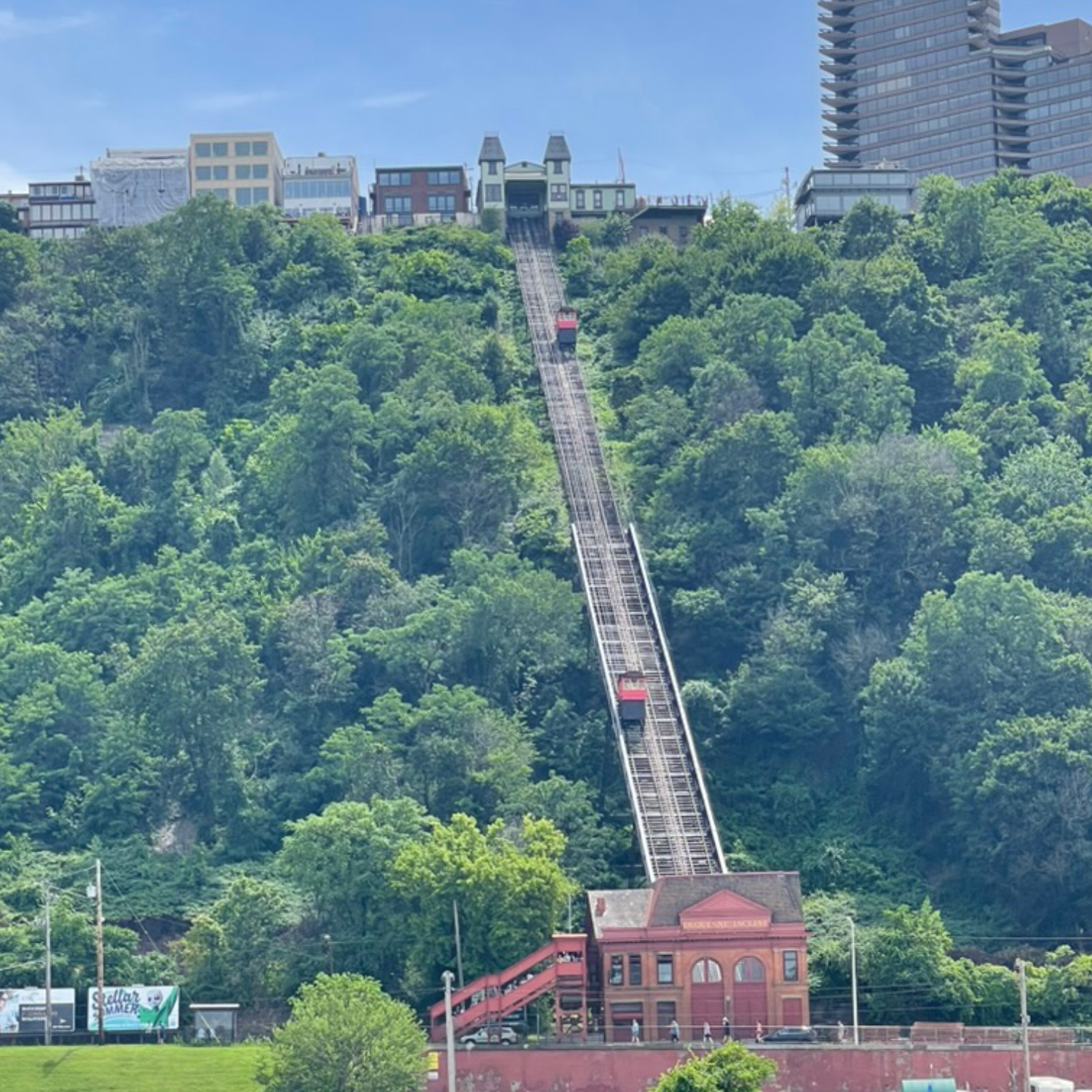
Courtesy of Brian Crawford
Website:
https://www.duquesneincline.org
Telephone number:
Location:
Upper platform: 1215 Grandview Ave, Pittsburgh, PA 15211
Lower platform: 1197 W Carson St, Pittsburgh, PA 15219
Hours:
Daily 6:30 AM to 12:30 AM
Description:
Duquesne Incline is a historic funicular railway in Pittsburgh, Pennsylvania, that has climbed the steep slope of Mount Washington since it opened to the public on May 20, 1877. Designed and built by Hungarian‑American civil engineer Samuel Diescher for the Duquesne Inclined Plane Company, the incline was originally powered by steam and later electrified, and was one of many such inclined planes used to connect the river‑level neighborhoods with the residential heights above.
Its track stretches approximately 800 feet in length and ascends about 400 feet at a grade of roughly 30 degrees, making it both an impressive feat of 19th‑century urban transportation and an enduring example of funicular engineering. The lower station is distinguished by its Second Empire architectural style, while the pairs of original wooden cable cars — with graceful lines and historically finished interiors — exemplify the craftsmanship of the period.
After decades of declining use and closure in 1962, local residents formed the Society for the Preservation of The Duquesne Heights Incline and successfully restored and reopened it in 1963, preserving its operational heritage and mechanical systems.
Today, the Duquesne Incline continues to operate as both a functioning transit link and a beloved tourist attraction, offering panoramic views of Pittsburgh’s skyline and the confluence of its three rivers from the upper station’s observation deck and housing an interpretive space that highlights the history of the incline and the many others that once climbed the city’s hills. In 1975 it was listed on the National Register of Historic Places, and, together with the nearby Monongahela Incline, was designated a Historic Mechanical Engineering Landmark by the American Society of Mechanical Engineers, reflecting its significance in the history of urban infrastructure and industrial design.