
Clifford B. Connelley Trade School
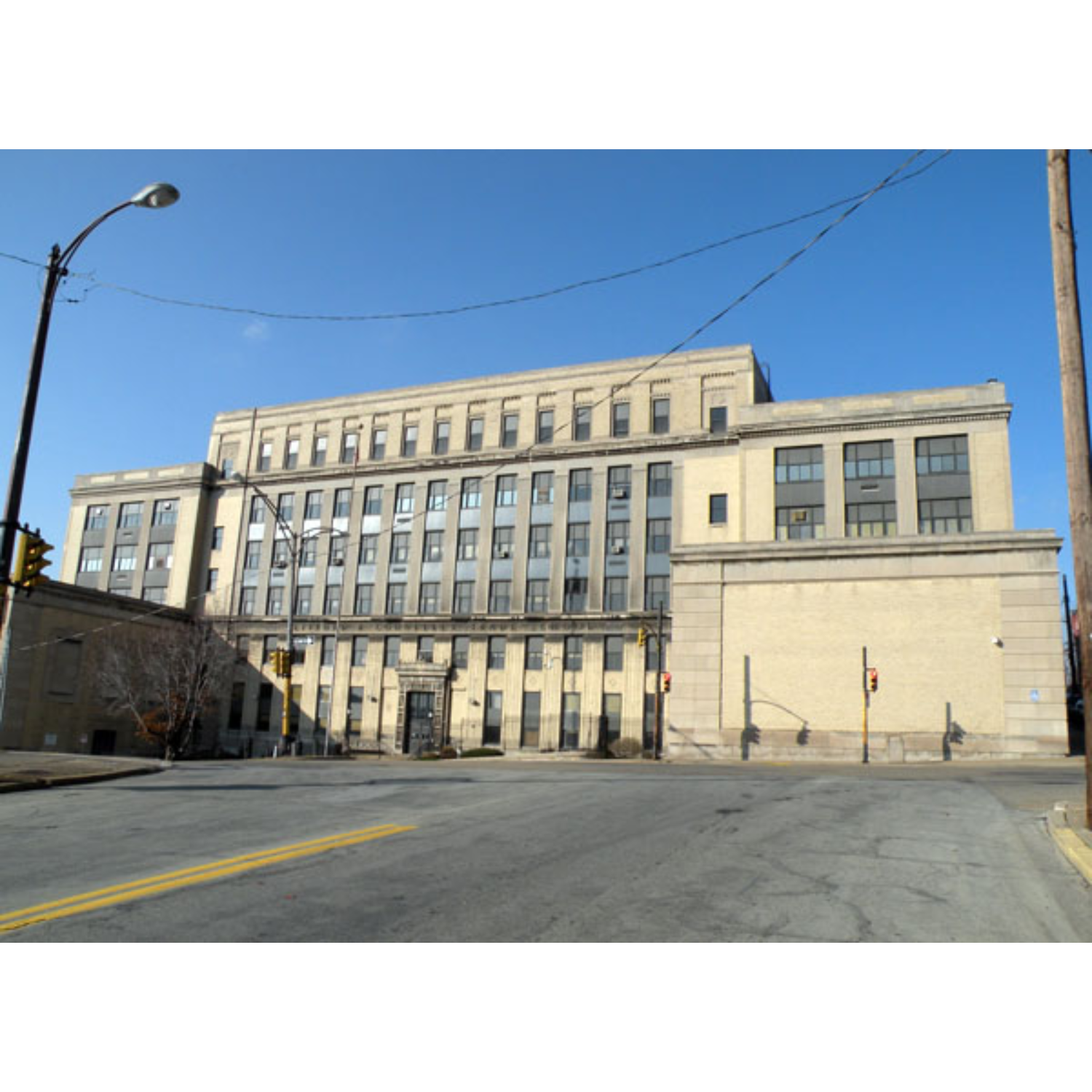
By Leepaxton at en.wikipedia, CC BY-SA 4.0
Location:
1435 Bedford Ave, Pittsburgh, PA 15219
Description:
Energy Innovation Center occupies the historic structure originally built in 1930 as the Clifford B. Connelley Trade School, one of the most advanced vocational education facilities of its era, conceived to prepare students for industrial and technical careers in a rapidly modernizing economy. Sited high in Pittsburgh’s Hill District to rise above the city’s then‑prevalent air pollution and connected by streetcar lines, the school was designed in a Classical Revival idiom by architect Edward B. Lee, with a symmetrical academic block flanked by wings and a separate shop building engineered to resemble a 1930s factory with saw‑tooth roofs that maximized natural light for workshop spaces — an embodiment of early twentieth‑century educational planning that combined functional efficiency with architectural dignity. The Connelley Trade School opened in 1931 with an array of modern features including broadcast communication systems, science laboratories, a gymnasium, swimming pool, and industrial workshops where students learned trades ranging from bricklaying and plumbing to automotive mechanics and graphic arts, representing a progressive approach to hands‑on technical education. Over the mid‑century decades the school adapted its programs and names in response to changing workforce needs, but declining enrollment and Pittsburgh’s post‑industrial demographic shifts led to its closure in 2004.
In the 2010s, the former Connelley school underwent an ambitious adaptive‑reuse transformation into the Energy Innovation Center, a multidisciplinary hub that preserves the original structure while establishing a living laboratory for sustainable energy, workforce development, and technology incubation. The renovation, guided by historic‑preservation standards and modern sustainability principles, created a campus co‑locating education and training facilities with research labs, business incubators, and collaborative industry‑university spaces; the project’s sustainability achievements include LEED Platinum certification, a testament to the successful integration of energy‑efficient design with preservation of the building’s architectural heritage. Today the Energy Innovation Center continues the site’s legacy of education by offering advanced workforce training in energy‑sector skills and related trades while serving as a beacon of green redevelopment and community revitalization in Pittsburgh’s Lower Hill District.